
Shanah tovah. Thanks for letting me share my thoughts with you this new year. I’m grateful that you are all here.
Years ago, a friend of mine was backpacking through Europe, and decided to go to Iceland. He stopped at a Chabad rabbi’s house in Reykjavik. The rabbi invited him for a Friday night meal. During the meal, packed house, many kids, he was asked a question: why are you backpacking through Europe? And he answered what he thought was the right answer: to find myself. And then he looked at the 5 year old kid, sitting across him, she had been good throughout the meal but now she looked at him with a mix of pity and concern. But you are here! She said.
Of course from a five-year-old’s perspective this looks like a looney tunes dialogue. What do you mean, find yourself? How can you lose yourself – you are where you are! And the funny thing is, the five-year-old was right, maybe more right than the backpacker who needed a plane ticket to figure out where he was standing. You can’t go find yourself, because you never left; presence isn’t somewhere you travel to.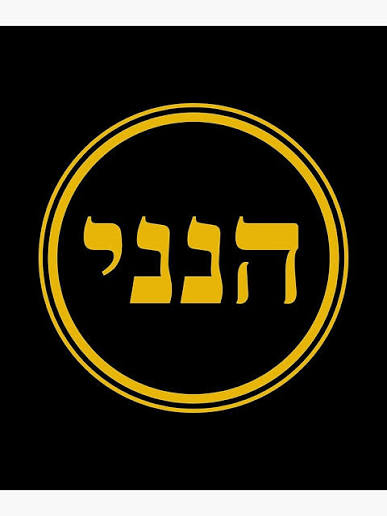
And yet – being located somewhere and being present are different things. You can be exactly where you are and still not be there. We are masters of this in our modern age. And there is one word in our tradition for the moment you stop merely standing somewhere and actually being there.
Now three times in the Torah portion of tomorrow, Avraham will be called. And three times, he will answer that single word. God calls: “Avraham.” And he answers: Hineni. Here I am. His son Isaac calls: “Avi, my father.” And he answers Hineni, my son. Here I am. And at the last unbearable moment, the angel calls from heaven: “Avraham, Avraham.” And he answers again — Hineni. Here I am.
What does it mean, “here I am”? Does God not know where Avraham is? Does his son not know? Does the angel not know?
Hineni is one of the most important words in the Torah, and it is almost impossible to translate. The English says “here I am” but really Hineni does not tell you a location. Hineni tells you a posture of the soul. It means: I am present. I am ready. I am yours. I see you. Hineni is the word you speak as you rise to act and embrace your belonging to something larger than yourself.
Look at what Avraham is actually doing on that mountain. He is an old man. Everything in this terrifying story is about the future, about his son, about the descendants he is promised: I will multiply your seed as the stars of the heavens and as the sand on the shore. Avraham will never live to count those stars. He is standing on a mountaintop saying yes to a future he will never meet. That is what it means to belong to something larger than yourself: to act, with your whole heart, for people whose faces you will never see.
And that is the question Rosh Hashanah quietly puts to us, underneath all the apples and honey. Not only “who am I?” but “what am I part of?” Folded inside that question are three harder ones.
The first: what do I owe the people who came before me?
The second: what do I owe the ones who haven’t arrived yet?
The third: what do I owe the ones who share this moment with me? Let us take them one at a time.
Dara Horn, a brilliant scholar of Hebrew and Yiddish literature, published a few years ago a book with a title so uncomfortable that, she jokes, no one will sit next to you while you read it on the beach. She called it People Love Dead Jews. And her argument was this: the world has become very, very comfortable with dead Jews. It builds them beautiful memorials. It weeps over their diaries. It loves Anne Frank… but just as long as she stays safely in the past, behind glass, a tragic silent victim. What the world has a much harder time with, Horn says, is living Jews: you know, the ones with opinions, demands and definitely not victims.
And she noticed something else: she noticed that we ourselves have let our memory of who we are collapse into a memory of how we died. That we can raise a generation that knows exactly how many and by which methods Jews were murdered by the Nazis — six million in total, 1.5 million children, the Einsatzgruppen, the camps — and knows almost nothing about how Jews lived: the vast, centuries-long arguments of the Talmud; the poetry of the Golden Age of Spain; the mystics of Tzfat; the law, the philosophy, the sheer stubborn genius of a civilization that has been thinking out loud for three thousand years.
And, if all we hand our children is the death, Horn warns, we have handed them a museum. And you cannot love a museum. You cannot build a life on a graveyard.
She has a new book, with an even more shocking title. She has taken the most infamous phrase in the German language — the Nazis’ own name for their plan to murder us, “the final solution to the Jewish question” — and she has reclaimed it back. Her book is called The Final Solution to the Jewish Question: A Love Story for the Living. And her actual solution turns out to be almost simple. Learn the history of the Jews and let it claim you as different. Jews have survived precisely because they are different. Learn the Jewish life: don’t be content with learning about our deaths. She argues that you cannot even understand Western civilization without understanding the Jews.
For instance, ours is the people that gave the world the weekend, the radical idea that a living being is not a machine, that even a servant, even a stranger, even an animal is entitled to rest. That is part of what was almost erased. Not only people – but values: a way of seeing what a person is worth.
So here is the first answer to what we owe the ones who came before us. We owe them more than yahrzeit candles. We owe them our attention and the work of actually knowing them: what they built and argued and dreamed. And then it is on us to carry the living substance of it forward.
I can even hear you thinking: oh, there goes the rabbi, talking about God again. But I am not – and Dara Horn isn’t either, God knows that!
I am saying that we owe our collective past, our ancestors, a Hineni. We owe participating in this conversation that began four thousand years ago. Hineni. I’m listening. I picked up the thread. It did not die with you.
And this brings me to the second question. What do we owe the ones who haven’t arrived yet?
Go back to Avraham on the mountain. The promise he receives is not about him. It is about stars: descendants he will never count, a whole people not yet born. Everything he does in the Torah’s story, he does for them. He says Hineni not only to the God above him but to the generations coming, the ones he is holding the door open for. And we are those stars. Every single one of us in this room is somebody’s impossible promise, somebody’s Hineni whispered on a mountain we never saw. And now the door is in our hands.
To say Hineni to the future is to make sure there is something living to inherit… not a museum, but a home. It means we teach, and learn, and learn to teach. It means we show up: at the Shabbat table, in this sanctuary, inside the messy, ongoing argument of Jewish life so that our children walk into a tradition that is warm and awake and theirs, and not a locked glass case of beautiful dead things.
Avraham’s stars are counting on us exactly the way we were counting on Avraham. That is the chain. Hineni is how you take your place in it.
Last night I spoke about the day after — about how, when the worst happens, people turn toward each other instead of away. This morning I want to tell you about someone who did exactly that, for us. Someone who was not one of Avraham’s Jewish children at all.
Her name is Anila Ali. She is a Pakistani-American Muslim woman, a retired California public school teacher, the founder of the American Muslim and Multifaith Women’s Empowerment Council. And in the raw weeks after October 7th, when so many people were choosing a careful silence if not openly attacking us, Anila Ali stood up at the March for Israel on the National Mall in Washington, looked out over that ocean of people, and said: “I stand before you as a friend of the Jewish people. I am here to affirm to my Abrahamic brothers and sisters that you are not alone.” And she ended with: Am Yisrael Chai. The people of Israel live.
I am here. That is our word, in her mouth.
Do you know what that cost her?
Muslim women who stood beside her were told by their own mosques to resign from her organization or be turned away at the door. She lost friends. She received death threats. And she did not look away. She led Muslim women to Israel to bear witness with their own eyes, and stood with Jewish women to break the silence around what was done to women on that day. She walked into Auschwitz alongside imams who stopped and prayed for our dead. And here is the most beautiful part: when you ask Anila Ali why, she does not start with politics.
She starts with her grandmother. Begum Syeda Khurshid Hafiz was a Muslim woman in pre-partition India who taught herself to read, and then went on to write more than a dozen books, and to build schools for girls who had never been allowed inside a classroom.
Ali says her own courage is a calling rooted in her family’s legacy. She is a link in her own chain. She is, in her own way, saying Hineni to her grandmother.
And she reminds her fellow Muslims of a piece of history they might rather forget: that when Muslims in America felt alone and afraid after September 11th — twenty-five years ago yesterday — it was Jewish organizations who stood up for them.
So let me say this as plainly as I can: if a Pakistani granddaughter can stand in the middle of Washington and say Hineni for a people that is not even her own, and pay a real price for it… then what is being asked of us, for our own people, for our own three-thousand-year-old chain, is not so much. It is only this: don’t look away. Be present. Be a link.
And now the third question: what do we owe the person sitting beside us right now, this morning, this year: what do we owe to those who share this moment on this earth with us?
For that, go back to the mountain one more time — but this time, do not listen to what Avraham says to God or the angel, listen to what Avraham says to his son.
Because there is a second hineni in this story, and we almost never speak about it. Halfway up the mountain, the son turns to his father and says a single word: Avi — my father. And Avraham answers with the very same word he had given to God: Hineni beni. Here I am, my son.
Think about how much harder that Hineni is. When God calls, infinite, invisible, a power you’ve never encountered before, it is almost easy to say yes. Awe carries you away. But sometimes this infinite power does not speak from heaven. Sometimes it is walking right next to you on the path, and it turns and asks you a question you can barely bear to answer. And still Avraham says hineni. I do not turn away from you either — not from the God above me, and not from my child beside me. I am here for both.
That is the hineni we owe one another. Not reverence for the dead, not plans for those yet to come, but plain, unglamorous, face-to-face presence… to the people who share this moment with us and call us by name. To be the kind of person who, when someone turns and asks are you there?, answers without flinching: Hineni. Here I am. I see you. I will not look away.
There is a moment, later today, when our own prayer leader will step forward before the open ark, and before daring to pray he will whisper a prayer that opens with this very word: הִנְנִי הֶעָנִי מִמַּעַשׂ. Hineni he-ani mi-ma’as.
Here I am: poor in deeds, trembling, unworthy, and standing up anyway on behalf of this whole community.
I love that the prayer begins by admitting he isn’t ready. Because none of us ever quite feels ready. Avraham wasn’t ready: you are allowed to be frightened and unfinished and full of doubt, and still say hineni. Here I am anyway. Count me in anyway.
And then, tomorrow, we are going to do something that is really nothing more than hineni with the words stripped away. We will raise the shofar — the horn of a ram, the very animal caught in the thicket on Avraham’s mountain, sounded from the exact spot where the third hineni was spoken — and we will blow. That cry is the sound of an entire people standing up at once answering the call. Here we are. All of us. Still here.
So this is the charge I want to leave you with as the year turns. And so you don’t have to hold it in your head alone, there is this magnet in your envelope. For the fridge. For the car. One word. This is the charge: say Hineni every day of this new year. Say Hineni to those who came before you — by learning who they truly were, life and stories and values and fights and loves and peace and dreams and desires. And carry it forward like the treasure it is.
Say Hineni to those who haven’t arrived yet, by handing them something living: a Judaism with pulse, passion, hand them a home and not a museum.
Say Hineni to one another: present, unafraid, willing to be counted. We are all links in a chain that did not begin with us and will not end with us.
Avraham looked up at a sky full of stars he would never meet, and he said: Hineni. We are those stars. And the only question this morning is… whether, when we are called by name, we will have the courage to answer the way he did.
Hineni. Here I am.
L’shanah tovah tikatevu — may we all be written, together, into a good and living year.