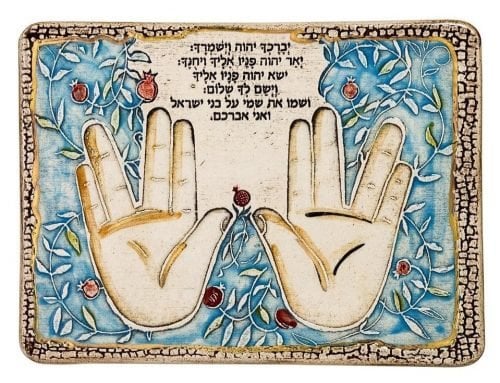
On Shabbat, around tables in this town and around the world, parents will rest their hands on the heads of their children, close their eyes, and say three short lines. They are the same three lines our parashah gives us this week, tucked into the middle of Nasso —
יְבָרֶכְךָ ה וְיִשְׁמְרֶךָ May God bless you and keep you.
יָאֵר ה פָּנָיו אֵלֶיךָ וִיחֻנֶּךָּ May God shine the divine face upon you and be gracious to you.
יִשָּׂא ה פָּנָיו אֵלֶיךָ וְיָשֵׂם לְךָ שָׁלוֹם May God lift the divine face toward you and grant you peace.
Here’s something to hold onto. In 1979, archaeologists digging in a burial cave at Ketef Hinnom, just outside the Old City of Jerusalem, found two tiny silver scrolls, rolled up like amulets. It took them three years to develop a method to unroll the scrolls without the metal shattering – and when they did they were more than surprised. Etched into silver some twenty-six centuries ago were these very words. The Ketef Hinnom scrolls are the oldest fragment of biblical text ever discovered. They are older than the Dead Sea Scrolls by many centuries. Which means that of all the words in the Torah, the ones we have been whispering the longest.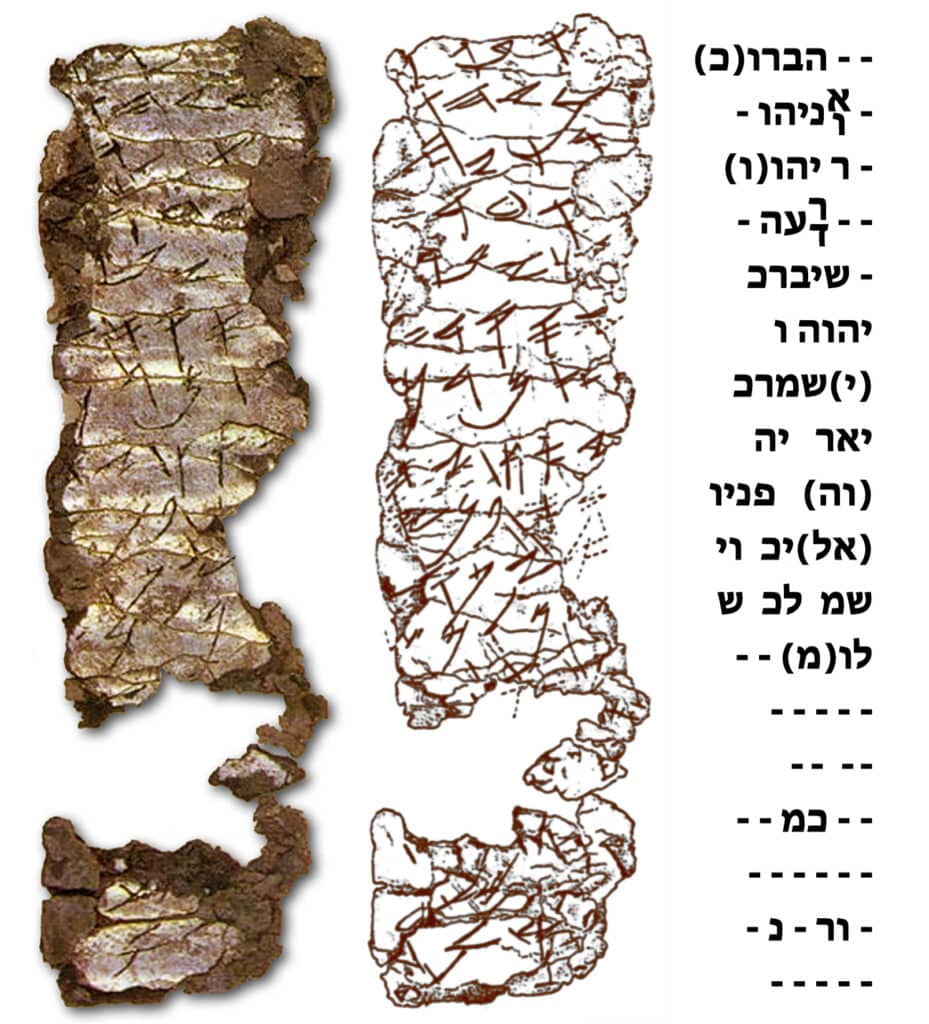
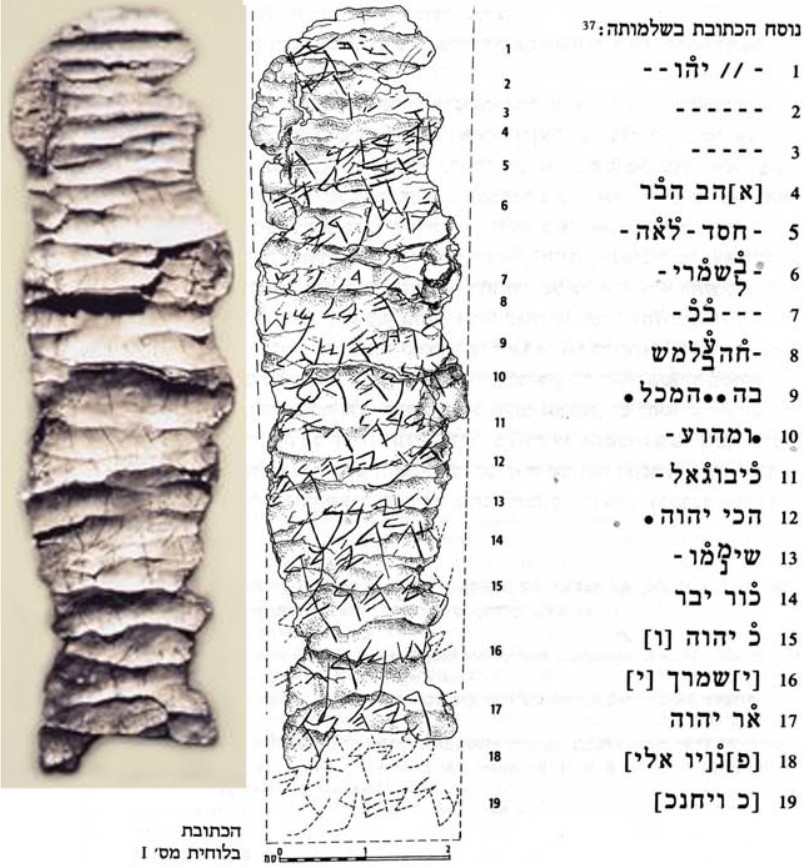
So tonight, let’s slow down and actually listen to the words we say so easily. In our siddurim, turn momentarily to page 107, so we can see the text together.
Let’s look first at the shape. Count the words in the Hebrew: the first line has three, the second has five, the third has seven. Count the letters: fifteen, then twenty, then twenty-five. The blessing widens as it goes. It opens like a hand — or like the dawn, a little more light with each line.
And notice: every “you” in it is singular. Not yevarech’chem, “bless you all,” but yevarechecha, “bless you” — you, one person. The kohanim stand before an entire crowd and bless every single soul as if each one were the only person in the room. However many of us are here tonight, the blessing is not crowd-sized. It is heart-sized. It is meant for you.
The first line: יְבָרֶכְךָ ה וְיִשְׁמְרֶךָ — bless you, and keep you.
Rashi asks the obvious question: if you’ve been blessed, why do you also need to be guarded? And he answers plainly — a blessing of wealth needs guarding, so that no one comes and takes it from you. A gift you can’t hold isn’t much of a gift.
But sit with that a moment longer, because it’s truer than it first sounds. Every blessing arrives with a shadow. Money can free you, or it can own you. Success can open your heart, or close it. Children are a blessing — and any parent in this room knows how this blessing can also keep you up at night. The rabbis coined the phrase = tza’ar gidul banim – the tzures of raising children. The sufferings of raising another human being. And I want to say – even a community like this one is a gift that has to be guarded, tended, protected from the small resentments that can corrode it. So the very first thing we ask is not only bless me, but help me keep what is holy about the blessing. Let me remember that even when I can’t see the blessings because of its accompanying tzures, it is still a blessin. Help me guard the gift, so it stays a gift.
The second line lifts us somewhere else: יָאֵר ה פָּנָיו אֵלֶיךָ — may God’s face shine upon you.
Notice the shift. The first line was about what we have. Now, suddenly, we’re talking about a face. The deepest blessing turns out not to be a thing God gives us at all. It is God turning toward us. You know this feeling. Think of walking into a room and watching someone’s face light up — because it’s you who walked in. That lit-up face — that is being loved, being seen, being wanted. We all know that there are people that when you meet them their faces are – look, I’m here. And there are those who when we meet them it is like – look! You are here!
This line is the prayer that the God’s look at us, and shine with the pleasure of seeing us, God’s creature, trying the best we can at all times. Just like when we see a baby giving their first steps, or a student having an aha-moment, or a friend accomplishing something they really wanted. THAT feeling is the greatest feeling – their greatness, their reaching that milestone.
And then: וִיחֻנֶּךָּ — and be gracious to you. The word is chen, grace — and chen shares its root with chinam, “for free.” Grace is the gift you didn’t earn. It is the reminder that not everything in your life is a wage you worked for. Some of it — maybe the best of it — is simply given. The love you didn’t deserve. The love you receive just because. Pure chen. That is what we want you to feel when you feel the presence of God – being purely loved.
And the third line, the widest one: יִשָּׂא ה פָּנָיו אֵלֶיךָ — may God lift the divine face toward you.
The Talmud is troubled by this one. The angels, it says, come before the Holy One and protest: Master of the Universe! In Your own Torah You wrote that You are the God who “lifts no faces” — who shows no favoritism, who cannot be flattered or bribed. So how can You promise Israel that You will lift Your face to them? And God answers — and I love this answer — How can I not lift My face to them? They sit down to a meal, and even if all they have to eat is an olive’s worth of bread, they stop to bless Me. How can I not show favor to a people who look for Me in something as small as a crumb?
To “lift the face” is a Hebrew idiom for forgiving — for overlooking a debt, for choosing love over strict accounting. So the highest line of the blessing is this: that God, who in principle plays no favorites, looks at us and tips the scale anyway. Out of love.
And it all comes to rest on one word: שָׁלוֹם. Peace.
The entire Mishnah — that whole vast sea of it — ends with a single teaching: that the Holy One found no vessel able to hold blessing except peace. Shalom is the kli, the cup. You can pour every other blessing in the world into a life, but without shalom — without some wholeness to hold it — it all just runs out through the cracks. That is why the blessing ends here. Peace is not one more item on the list. Peace is the container that lets you keep all the rest: the feeling of being at peace with the life you have been given, with the life you created, with the life that you made out of your choices with the hand you have been dealt – that is wha makes it possible to hold blessing.
So watch what this blessing has done. It started with our hands full — bless your things, guard your stuff. It moved to our faces — be seen, be graced. And it ended with our whole selves made whole — be at peace. From having, to being seen, to being whole.
One last thing. Right after these three lines, the Torah adds a quiet sentence that changes things a bit. Sephardim still say that line every morning. God says: “They shall place My name upon the children of Israel — וַאֲנִי אֲבָרְכֵם — and I Myself will bless them.” The kohanim, it turns out, don’t actually do the blessing. They are only the conduit the blessing passes through. The hand on the head, the voice saying the words — those are the pipes through whoch the shefa, the abundance, the light comes through. The blessing itself comes from somewhere higher.
Which means every one of us can be that vessel – it is the words that matter, the energy behind them, not just the kohanim being kohanim. Tonight, when you bless a child, a partner, a friend — when you simply wish someone shabbat shalom and mean it — you are doing exactly what the kohanim did. You are letting something larger than you pass through your hands.
So now, as we rise for barechu, as we rise to bless the source of all blessings, when we stake – shabbat is here, also remember: Shabbat is itself the kli, the vessel, the one day built to hold all our blessings. Shabbat is the day we breathe and feel our blessings. So may we be blessed and kept; may the face of the Holy One shine upon us and be given more than we deserve; may we be lifted, and made whole.
And may we, each of us, be a vessel through which that blessing reaches someone else.
Shabbat shalom.