
Parashat Tazria: The Power at the Threshold
Summary of Tazria-Metzora
Tazria opens with the laws of tum’ah following childbirth — seven days for a boy, fourteen for a girl — and the korbanot, the sacrifices, the mother brings afterward. It then moves into the bulk of the parasha: the diagnosis of tzara’at, a skin or surface condition impossible to identify nowadays. Tzara’at can also appear on garments, and the kohen determines whether the fabric must be burned or can be washed and restored. The person afflicted is isolated outside the camp.
Metzora continues with the return. The person healed of tzara’at undergoes an elaborate purification ritual involving two birds, cedar wood, crimson yarn, and hyssop — one bird is slaughtered, the other released alive. There are additional offerings on the eighth day, with provisions for those who can’t afford the full sacrifice. The parasha then addresses tzara’at appearing on the walls of houses, and closes with laws of bodily discharges — seminal emissions and menstrual flow — and their respective periods of tum’ah and purification.
==
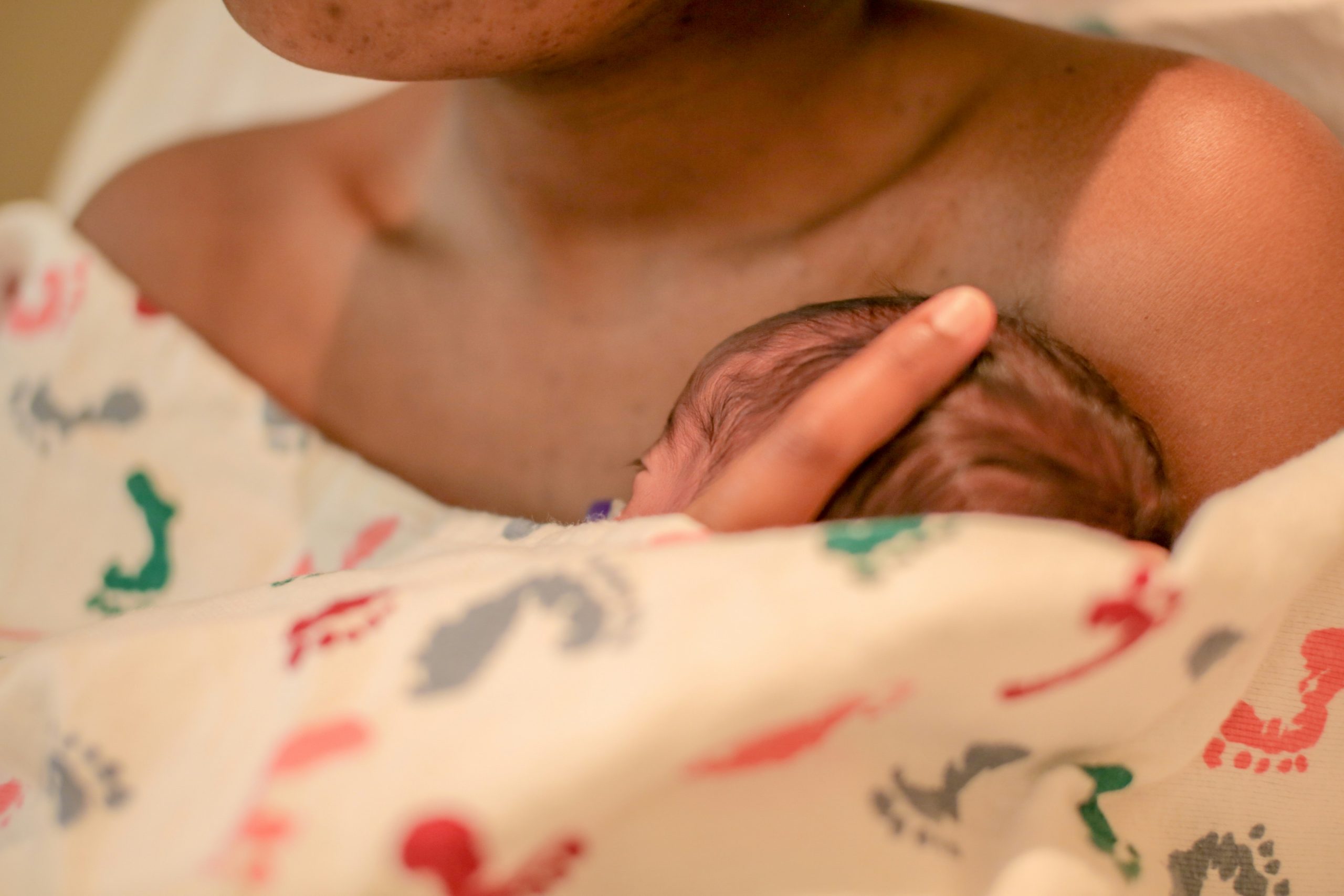
There is a question I want us to sit with this evening, and I’ll warn you — it’s uncomfortable. Not because the answer is hard, but because we’ve been trained to ask the wrong question for so long that the right one feels strange in our mouths.
What is the wrong question? When we open Parashat Tazria, we read that a woman who gives birth is t’me’ah — ritually impure — and we immediately go on the defensive. Impure, which is a terrible translation for tum’ah, makes us go into the defensive. Why is childbirth impure? What did she do wrong? How do we explain this to modern sensibilities? We rush to apologize for the Torah, or we rush to distance ourselves from it. Either way, we’ve already lost. Because we’ve accepted the premise that tum’ah means something is wrong. That it is contamination. That it is shame.
Photo by Solen Feyissa on Unsplash
So tonight I want to push back on that.
Let’s read the actual text. Isha ki tazria v’yalda zachar, v’tam’ah shiv’at yamim. A woman who brings forth seed and bears a male child shall be t’me’ah for seven days. V’im n’keivah teiled, v’tam’ah sh’vuayim. And if she bears a female child, she shall be t’me’ah for two weeks.
Now — what else in the Torah generates tum’ah? Several things. But contact with a dead human body ground zero for tum’ah. That is the most potent source of tum’ah we have. And it isn’t because death is dirty. No – think about it – we trat the dead body with utmost respect. You probably know, for instance, we can’t perform autopsies unless there is an overriding reason for it. We don’t allow even bits of bodies to stay unburied. We have a beautiful ceremony of preparing the body for burial, one that compares the body to the sacred ark where the Torah is kept. And that is because death is a sacred threshold.
Death is the moment a human being crosses the boundary between physical existence and physical non-existence. To be in the presence of a dead human body is to have touched the border of the world. Is to stand at the place where being here meets the mystery of existence elsewhere. A mystery from which we don’t have proof, as many would love to have. We have hints, at best. And the contact with that unanswerable mystery changes you deeply. You can’t just walk into the Mishkan afterward and pretend nothing happened.
Birth, if you think about it, is the same crossing, the same sacred threshold, just from the other direction. A woman in labor stands inside that very mystery. One moment there is one person in the room, and then there are two. Something has crossed over from non-being into being. The mother has been the doorway. And not a passive doorway — the text says ki tazria, she brings forth seed, she is the active agent. Above all, however, she has stood at a place that human beings are not meant to stand casually. She has been, for those hours, the boundary between worlds – in many cases at the peril of her own life. Because standing in that border is also dangerous, and it was certainly more dangerous in the past than it is today – but still.
Tum’ah is not punishment. Tum’ah is the Torah’s way of saying: you have touched enormity. You have encountered the mystery andsurvived to tell the tale. You need time to process. You need a container for what just happened before you walk back into the ordinary.
Think of it this way. Astronauts returning from space go through a period of re-entry. Not because space is dirty. Because the human body and mind need a transition between the extraordinary and the everyday. The ritual system of Leviticus is, among other things, a system of re-entry. It takes seriously the idea that encounters with the deepest forces of existence — life and death, creation and dissolution — leave a mark that needs tending.
Once we understand this, the asymmetry in the text stops being an embarrassment and starts being a revelation.
Seven days for a boy. Fourteen for a girl. Twice as long. Why? For centuries, commentators have tried to soften this. Some say it’s purely physiological. Some try to explain it away. And the most common feminist critique treats it as evidence of devaluation — a girl is twice as impure, the birth of a daughter twice as contaminating.
But if tum’ah is not contamination — if tum’ah is power — then the math reads completely differently.
When a woman gives birth to a son, she has done something extraordinary. She has stood at the threshold. She has brought a life across. When a woman gives birth to a daughter, she has done that — and something more. She has brought into the world another being who carries within her body the capacity to stand at that same threshold. She hasn’t just crossed the boundary between existence and non-existence. She has created a new doorway. The power is not just enacted, it is replicated. It is, if you will, power within power. Creation within creation.
The Torah looks at that and says: you need more time. Not because something worse happened. Because something bigger happened. The resonance is deeper. The mystery you touched is double. The return to ordinary life takes longer because you have gone further from ordinary life.
I want to be honest with you — I am not the first person to read the text this way. Feminist scholars of Jewish ritual have been reframing tum’ah for decades. And I know that for some of us, the damage of the old reading is so deep that no reframe truly resonates. I respect that. I’m not asking anyone to feel comfortable with this text. I’m asking us to read it more carefully than we have been.
Because there’s another layer here, and it’s the one that challenges me the most.
Look at the larger structure of what’s happening in the Torah right now. A few chapters ago, we built the Mishkan — this extraordinary architectural project to create a space where God can dwell among us. The Mishkan is a container for holiness. It has walls. It has curtains. It has gradations of access — the outer court, the inner court, the Holy of Holies. It is a technology of sacred boundary, a place where one could feel God’s presence – and we know how dangerous that can be, as evident by the deaths of Nadav and Avihu.
In our reading, the Torah turns from the Mishkan to the body of a woman at birth, and it uses the same kind of language. Periods of separation. Gradations of access. Rituals of re-entry. As if to say: the body, too, is a Mishkan. The body, too, is a place where the boundary between the human and the divine can become so thin that the soul leaves. The body, too, requires the same reverence. The Torah applies to the mother the same logic of holiness it applies to the dwelling place of God. The messiness of the laboring body of a woman – blood, after birth and all – is treated by the Torah as a site of encounter with the forces that underlie all of creation.
And when that body brings forth another body with the same capacity — a daughter — the Torah doubles the time of recognition. As if the echo is louder. As if the resonance between the woman and the girl she has just brought into being is so powerful that it requires a longer period of re-entry into the everyday.
I said at the beginning that the right question feels strange. Here it is. What if we stopped asking, “Why does the Torah treat birth as impure?” and started asking, “What would it mean to take seriously the Torah’s claim that birth is an encounter with the most powerful forces in existence?” If we ask that question, then the next question is – how would the world change if we genuinely believed that new mothers had just stood at the place where being meets non-being?
What would it change how we understand the arrival of a daughter — if we saw it not as the lesser event that centuries of patriarchal commentary have made it, but as a doubling of the original power, an echo of creation within creation?
The Torah gives us, right here in this very uncomfortable parasha, a framework for honoring the body, for recognizing power, and for insisting that contact with the deepest mysteries, the forces of life and death, requires communal support, ritual containment, time.
Jews have spent so many centuries apologizing for Tazria. Maybe it’s time we started listening to it. Shabbat shalom.
==
~ How unconfortable are you with Tazria? Why?
~ Is the woman active or passive in this?
~ Is tum’ah a question of punishment, in your opinion? Why?
~ Why, in your opinion, the time the mother receives as separation from the world is doubled in the case of the birth of a daughter?
~ If we read the word not as “ritual impurity” but as “ritually separated” does it make a difference?
~ Is it possible to reread Tazria, not as a punishment for something wrong that the woman did, but for something powerful?